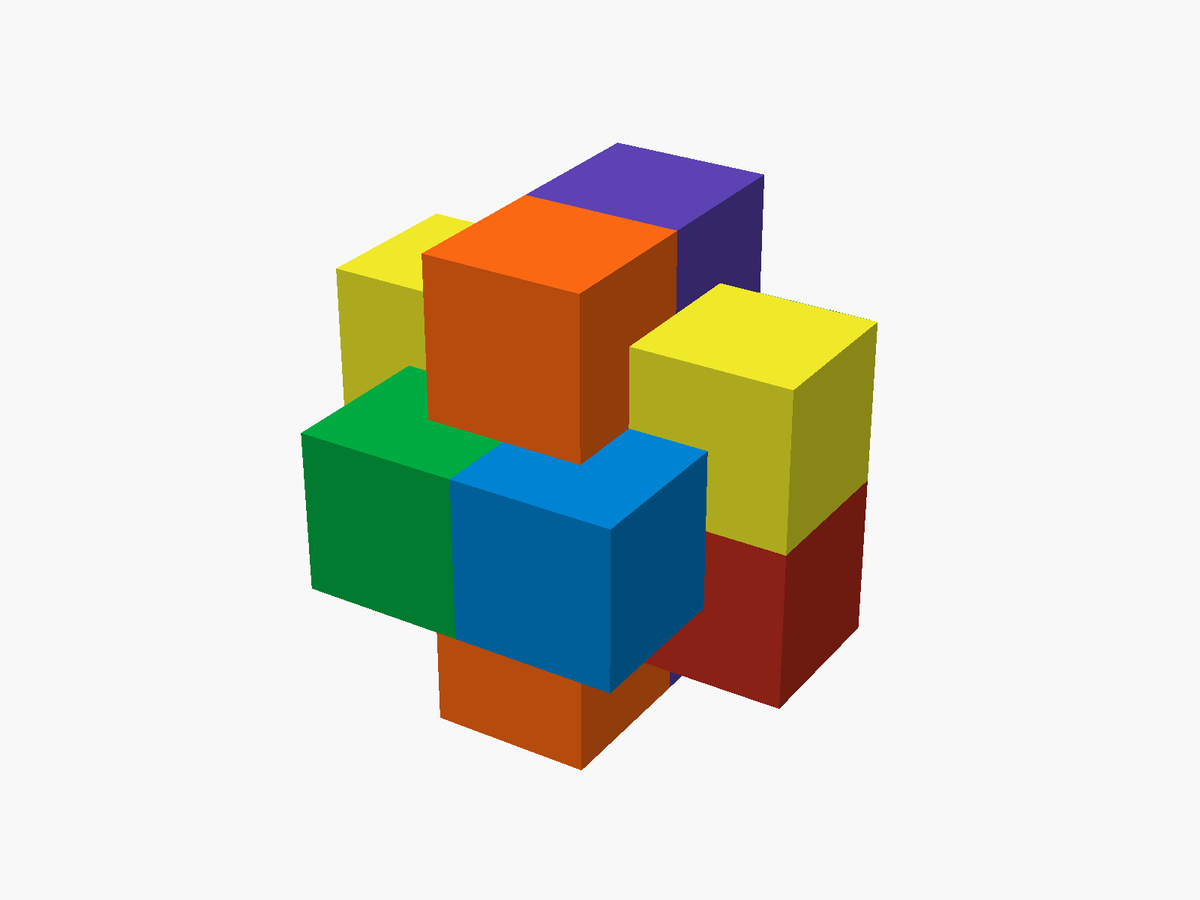
This is a worked example of a puzzle post on Next Piece. It will be replaced by real posts soon. The puzzle is a real one, though: Burr No. 305 from Bill Cutler’s tabulation of the 314 solid notchable six-piece burrs.
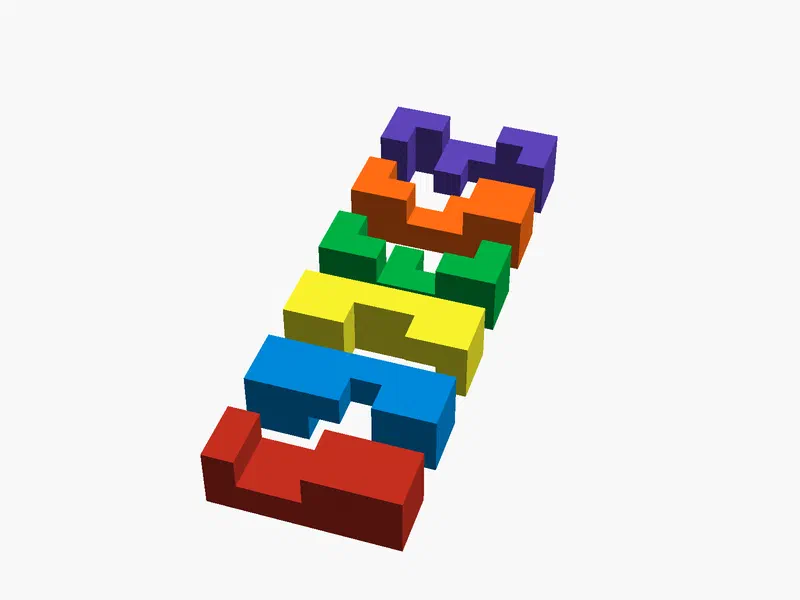
A six-piece burr is three pairs of notched 2×2×6 sticks crossing at right angles. Solid means the six sticks fill the burr shape completely: 104 cubes and not one gap. With no room to wiggle, the very first move has to take the puzzle apart, which makes it a level-1 burr. The sticks are named by their Känel numbers, a compact code for a stick’s notches: 52, 615, 792, 960, 975, 992. They fit together in exactly one way.
The pieces#
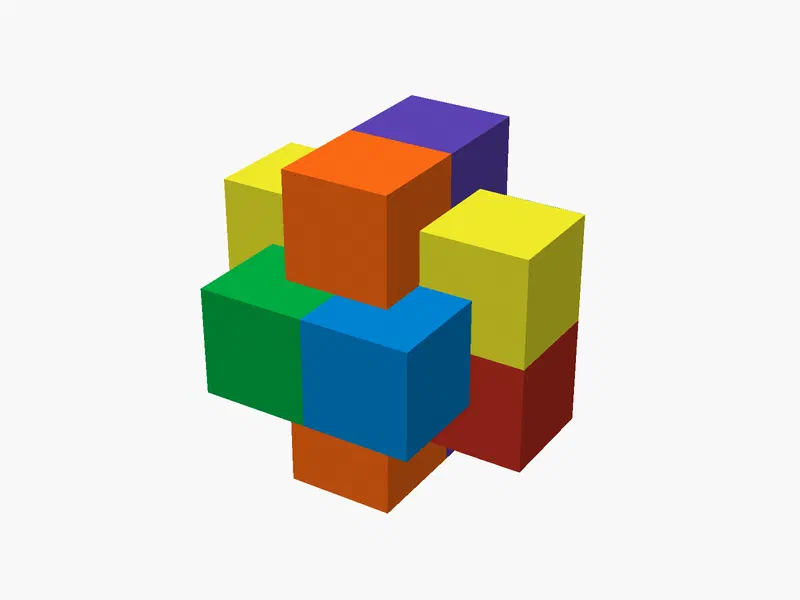
Turn it around#
The pieces pulled apart from the centre so you can see how the notches meet.
Taking it apart#
Every separation below is a single straight slide, checked by a search over all the ways each group of sticks can move.
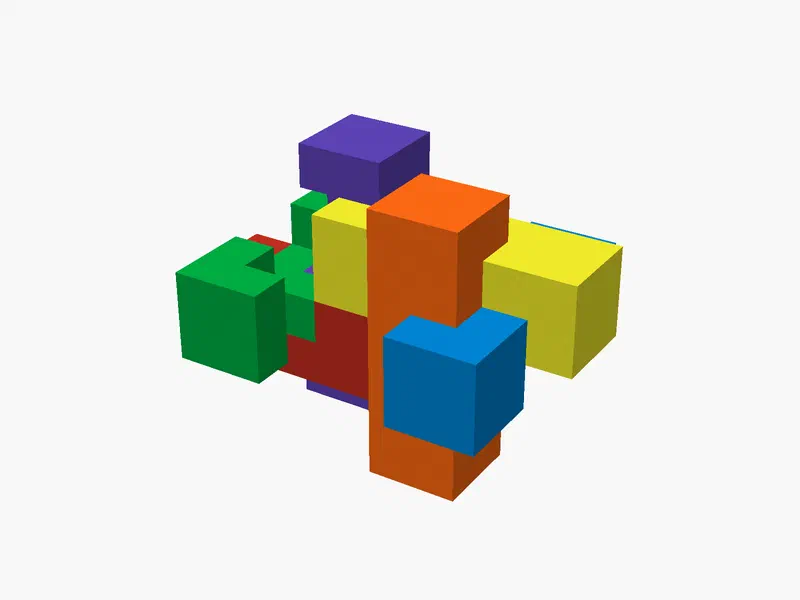
Step 1: Red, green and purple (52, 960 and 992) slide out together along the red stick. 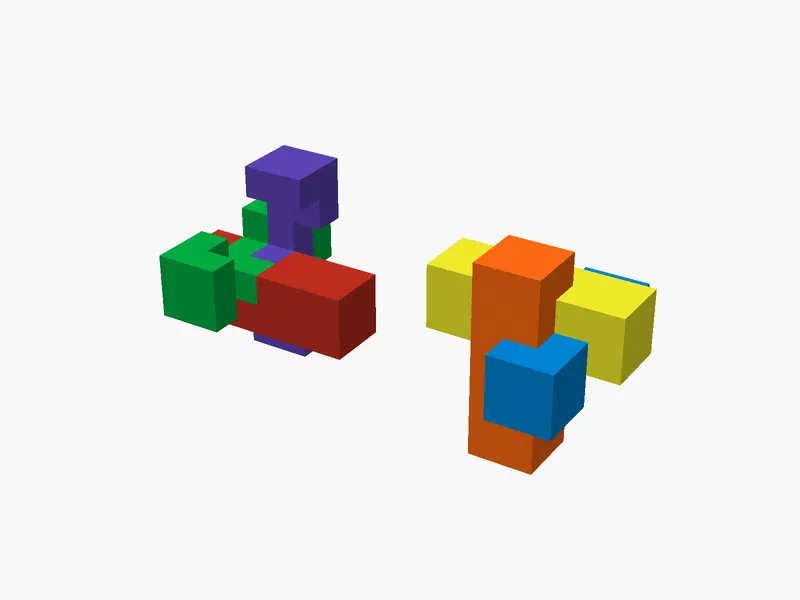
Step 2: One move later the burr is in two halves of three sticks. 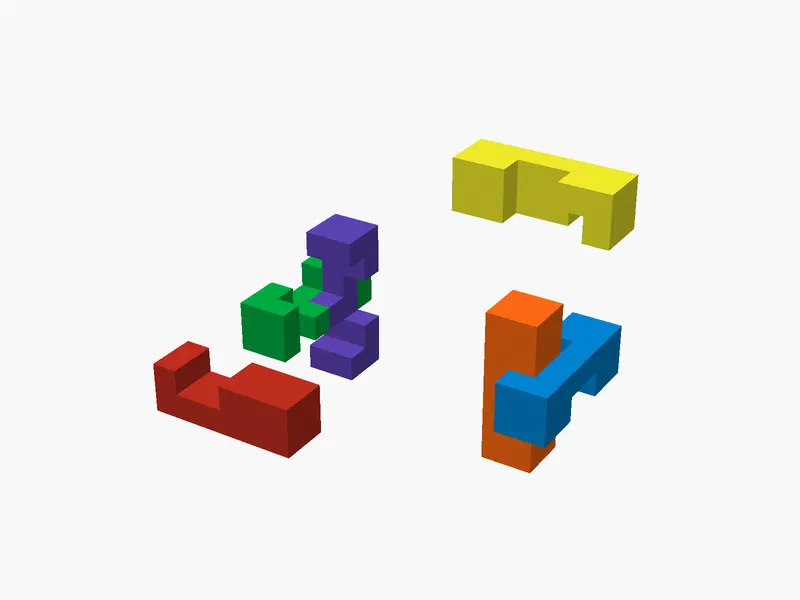
Step 3: Each half gives up one stick: red slides sideways out of its half, yellow lifts out of the other. 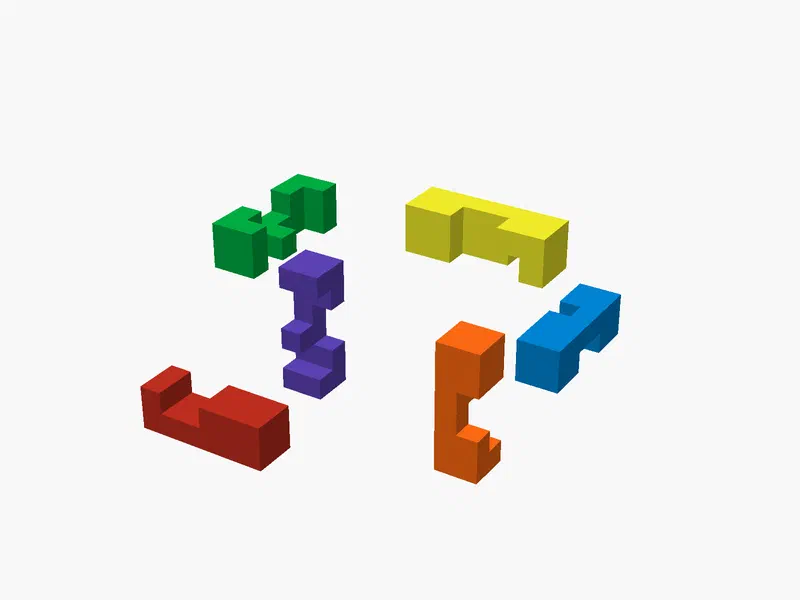
Step 4: The last two pairs come apart: green from purple, blue from orange.
How the images were made#
The sticks were generated from the six Känel numbers, checked to have exactly one assembly,
rendered in OpenSCAD and converted to a coloured GLB for the viewer with the blog’s
tools/stl2glb.py. The colours are PLA filaments in stock, so a printed copy can match.